
Heal | Vaidya Kund
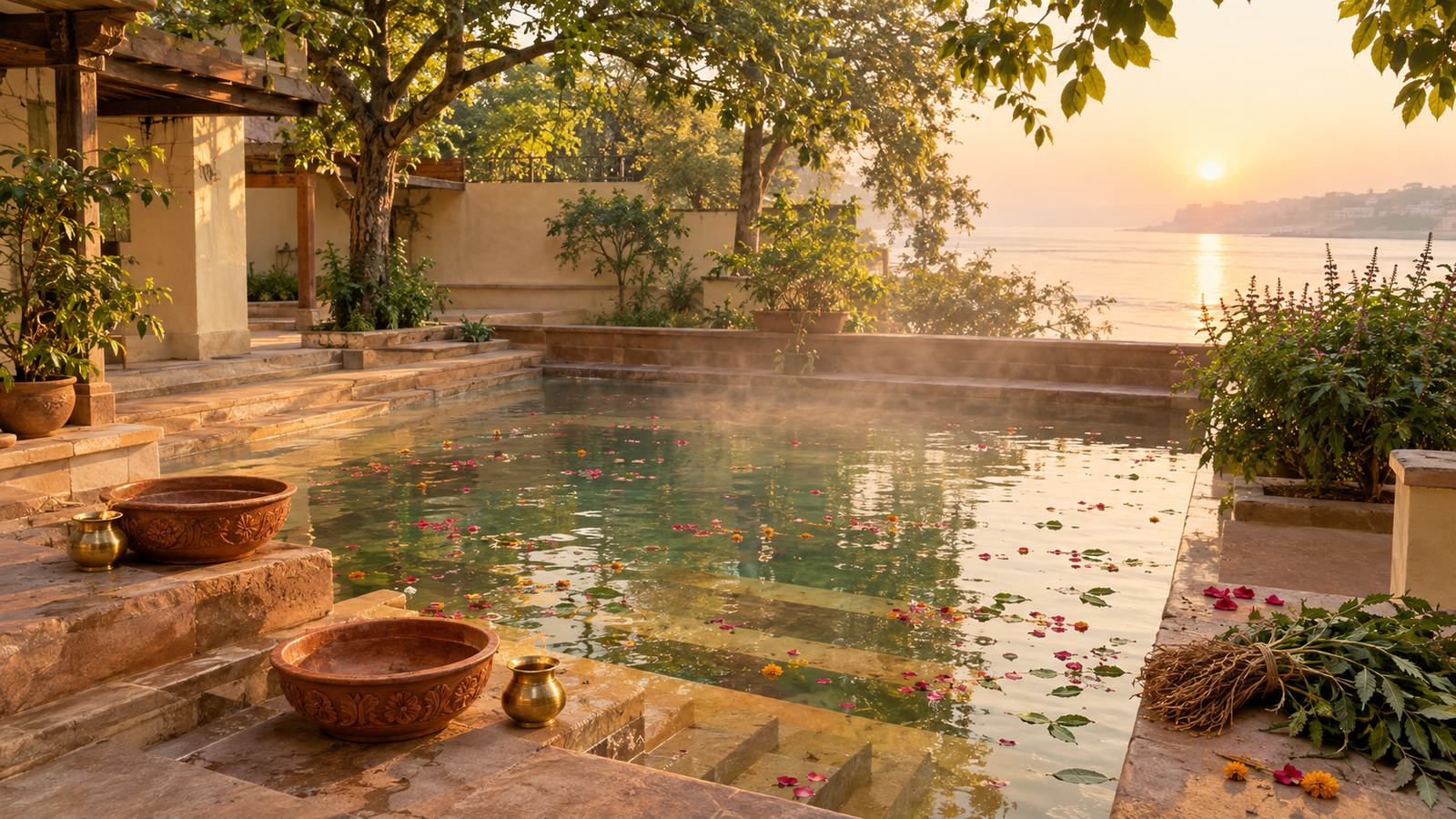
The sacred pool of Vaidya Kund.
A bathing pool blessed with Gangajal, in the Vedic tradition of Ganga Snana. Each dawn the water is infused with fresh Tulsi, Neem, rose petals, Khus and wild turmeric.
- Hand-carved terracotta basins at the entrance for Pada Prakshalana, the ritual washing of hands and feet
- Sacred steps (Snana Sopana) leading down to the water
Heal | Snana in the tradition
The sacred bath in India’s texts.
For thousands of years, a bath in sacred water has meant more than washing. It is a moment of purification, renewal and surrender, and Indian literature returns to it again and again.
At the Vaidya Kund, the bath is a quiet ritual: wash your feet, step down slowly, and let the water do what it has always done.
RigvedaHonours the waters, Apah, as mothers and healers who carry away what is impure. Its hymn to the rivers, the Nadistuti, names the Ganga first.
MahabharataIn their forest years, the Pandavas set out on a tirtha-yatra, bathing in the Ganga and other holy waters for purification and renewal.
Bhagavata PuranaTells how the Ganga descends from the feet of Vishnu through King Bhagiratha’s devotion, purifying all who bathe in her.
TirukkuralWater cleanses the body; truthfulness cleanses the mind. The outer bath and the inner one belong together.
The Bhakti traditionFor its poets and saints, the holy dip became an image of devotion itself: stepping into the water as one surrenders to the divine.
Heal | Snana in Ayurveda
The right way to bathe.
Ayurveda treats the daily bath, snana, as a practice in itself. The classical teachers, Sushruta and Vagbhata among them, left simple guidance that still feels wise today, and it shapes how the Vaidya Kund is used.
At La Aranya, the morning bath follows these ways: fresh amalaki and ubtan are laid out beside the Kund, with soft cotton cloths and a cool-water basin for the head.
Bathe in the morningBefore the morning meal, to awaken the senses and kindle Agni, the digestive fire. Never straight after a heavy meal.
Warm body, cool headLukewarm water for the body; cooler water for the head, eyes and neck. Hemadri advises not mixing hot and cold in one bath.
Dry gently, dress freshRub the body with a soft cotton cloth, said to bring lustre to the skin, then change into fresh, clean clothes.
Herbs in the waterAmalaki steeped in the bath, and the classic ubtan of gram flour, turmeric and rose water in place of soap.
Also at La Aranya
Keep exploring.

Concept in development
Help shape La Aranya.
Booking is not open yet. Your view will shape what we build. We would love to hear:
- Would you stay here on a visit to Varanasi?
- Which offerings matter most to you?
- What is missing?